Dental Waste Disposal

Amalgam and mercury waste disposal for dental practices

Collection of amalgam separator waste, capsules, waste amalgam and teeth with amalgam fillings, sent for mercury recovery. Typical UK costs.

In short: Amalgam waste disposal is the collection of waste amalgam, used capsules, amalgam separator contents and extracted teeth with amalgam fillings, which are hazardous waste under List of Wastes code 18 01 10* because of their mercury content. It is needed by any practice that places or removes amalgam fillings. In the UK it typically costs £20 to £50 per container, with a hazardous waste consignment note for each collection.

Get a free quote

Fixed price, no obligation. We aim to reply the same day.

By sending this form you agree to be contacted about your enquiry. See our privacy policy.

Amalgam and mercury waste disposal for dental practices

Mercury is the reason amalgam is treated so carefully. Waste amalgam, empty and part-used capsules, the contents of chairside traps and amalgam separators, and teeth with amalgam fillings all release mercury if they are incinerated, landfilled or flushed away. They must be kept out of clinical bags and drains, stored in dedicated sealed containers, usually white with a mercury suppressant, and sent to a facility that recovers the mercury. Amalgam must never be put into the infectious or sharps streams.

In Great Britain, amalgam has had to be used only in pre-dosed encapsulated form since 1 January 2019, and practices that place or remove amalgam must have a separator that retains at least 95 percent of amalgam particles. Use is already restricted for children under 15 and pregnant or breastfeeding patients. Parties to the Minamata Convention agreed in November 2025 to end dental amalgam use by 2034, so amalgam removal, and the waste it creates, will continue for years.

What is included

  • Sealed white amalgam containers with mercury suppressant for chairside use
  • Collection of full amalgam separator pots or cartridges when they are changed
  • Disposal of chairside trap and filter contents containing amalgam
  • Collection of empty and part-used amalgam capsules and excess mixed amalgam
  • A separate container for extracted teeth with amalgam fillings
  • Hazardous waste consignment note for every collection, with the correct waste code
  • Transport by a registered carrier to a permitted mercury recovery facility

Who it is for

  • General dental practices that place or remove amalgam fillings
  • Practices with separators due for a cartridge or pot change
  • Practices phasing out amalgam that still have old stock and capsules
  • Multi-site groups wanting one amalgam collection schedule across practices
  • Practices preparing for a CQC, HIW, HIS or RQIA inspection

How much does it cost?

As a guide, amalgam waste collection in the UK usually costs £20 to £50 per container, with separator cartridges often priced individually. Many practices pay less per collection when amalgam is included in a managed service with their other waste streams. See our full cost guide.
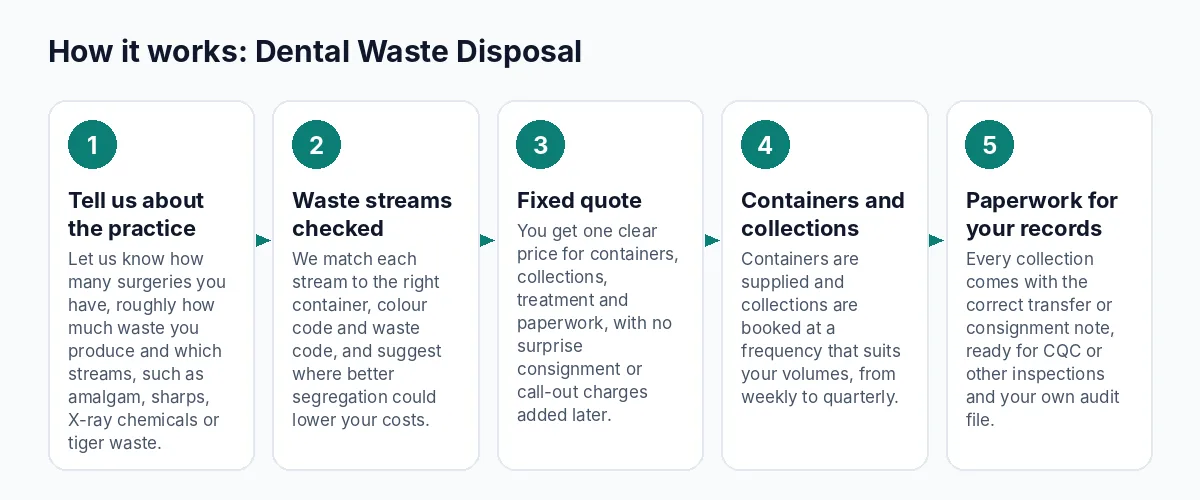
How it works

How amalgam and mercury waste disposal for dental practices works, step by step
  1. Check volumes

    The number of surgeries, how often amalgam is placed or removed and the separator model are noted to size containers and collections.

  2. Supply containers

    Labelled, sealed amalgam containers are supplied for each surgery and the decontamination area, plus a teeth-with-amalgam container.

  3. Collect and consign

    Full containers and separator cartridges are collected with a hazardous waste consignment note completed for each collection.

  4. Recover mercury

    Waste goes to a permitted facility where mercury is recovered, and your copy of the note goes into your waste records.

Amalgam and mercury waste disposal for dental practices: FAQs

How often should our amalgam separator be emptied?

Follow the separator manufacturer's instructions, which usually give a service interval or a fill indicator. Many practices change the pot or cartridge once or twice a year, but busy practices doing lots of amalgam removal may need more frequent changes. A full or poorly maintained separator will not retain the required 95 percent of amalgam particles, so record each change and keep the paperwork.

Can we rinse amalgam containers or tip their contents together?

No. Amalgam containers should stay sealed when not in use and should not be emptied, rinsed or combined, as this releases mercury vapour and risks spills. Keep the lid closed, store containers away from heat, and hand them over sealed for collection. If amalgam is spilled, use a mercury spill kit and follow your practice spill procedure.

Do we still need amalgam disposal if we no longer place amalgam fillings?

Yes, if you remove old amalgam fillings. Drilling out old amalgam produces particles caught by the separator and chairside traps, and extracted teeth may contain amalgam. You will still need an amalgam separator and amalgam containers. Leftover capsules from stock should also be collected rather than kept indefinitely.

What about amalgam use in Northern Ireland?

Northern Ireland follows some EU mercury rules under the Windsor Framework. The EU ban on dental amalgam use from 1 January 2025 applies there, but Northern Ireland has an exemption allowing continued use until 2034 or an earlier agreed date, with conditions. Waste rules for amalgam collected in Northern Ireland are set by the NIEA.

Get a quote for amalgam and mercury waste disposal for dental practices

Send a few details and get one clear, fixed price, usually the same day.

Get a quote

Last updated 6 November 2026