Dental Waste Disposal

Dental medicines and gypsum waste disposal

Out-of-date and part-used dental medicines collected in pharmaceutical containers, plus gypsum and plaster models kept separate. Typical UK costs.

In short: Dental medicines and gypsum disposal covers out-of-date, part-used and returned medicines, collected in pharmaceutical waste containers for incineration, and plaster and gypsum models, which are kept separate from general waste. It suits any practice clearing expired stock, emergency drugs or study models. In the UK, a pharmaceutical or gypsum container collection typically costs around £15 to £45 per container.

Get a free quote

Fixed price, no obligation. We aim to reply the same day.

By sending this form you agree to be contacted about your enquiry. See our privacy policy.

Dental medicines and gypsum waste disposal

Dental practices hold a range of medicines: local anaesthetics, emergency drugs such as adrenaline and glucagon, fluoride varnishes, antibiotics, topical agents and, in sedation practices, controlled drugs such as midazolam. When they expire or are part-used, they must not go down the sink, in clinical bags or in general waste. Non-cytotoxic medicines go in blue-lidded pharmaceutical containers for incineration, and any cytotoxic or cytostatic medicines go in purple-lidded containers. Controlled drugs must be denatured before disposal, following the Misuse of Drugs Regulations 2001 and your controlled drugs procedure.

Gypsum and plaster models, study casts and impressions poured in plaster are not clinical waste once they have been disinfected, but they should still be kept out of general waste. When gypsum is landfilled with biodegradable waste it can produce hydrogen sulphide gas, so it needs its own container and an appropriate treatment route. Practices and laboratories often accumulate boxes of old models, which are best cleared in one collection.

What is included

  • Blue-lidded containers for non-cytotoxic medicines
  • Purple-lidded containers where any cytotoxic or cytostatic medicines are used
  • Collection of expired emergency drugs and part-used medicines
  • Advice on denaturing controlled drugs before disposal
  • Separate containers for gypsum and plaster models
  • Bulk clearance of old study models and casts
  • The correct transfer or consignment note for each stream

Who it is for

  • Practices replacing expired emergency drug kits
  • Sedation practices disposing of controlled drugs
  • Orthodontic practices and labs with large stocks of old study models
  • Practices clearing medicine cupboards before an inspection
  • Practices closing, merging or moving premises

How much does it cost?

As a guide, UK collection of pharmaceutical waste or gypsum usually costs around £15 to £45 per container depending on size, and is often cheaper when added to a regular managed service collection. See our full cost guide.
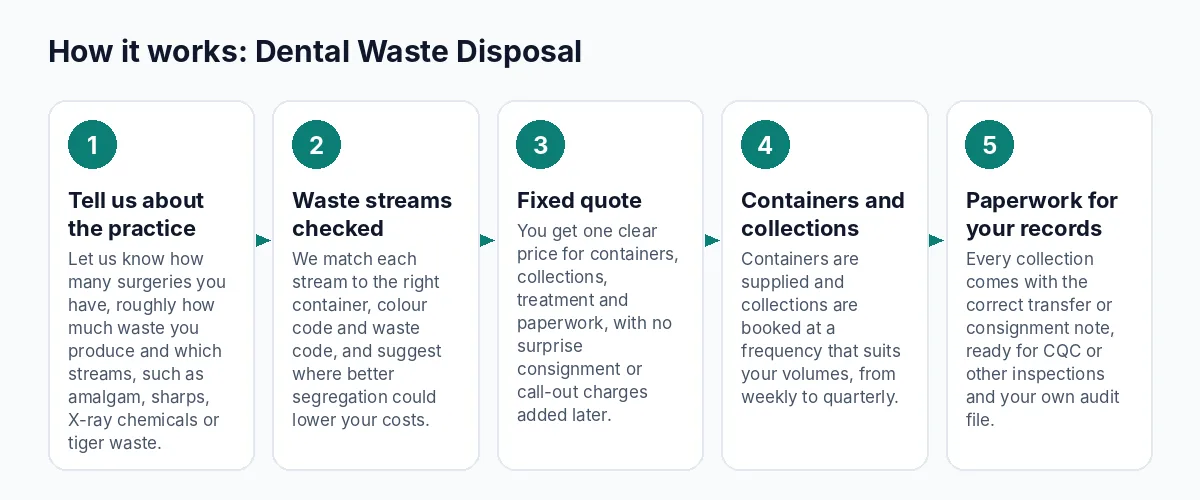
How it works

How dental medicines and gypsum waste disposal works, step by step
  1. Audit the stock

    Expired and part-used medicines and stored models are identified so the right containers and sizes are supplied.

  2. Segregate correctly

    Medicines go in pharmaceutical containers, controlled drugs are denatured first and gypsum goes in its own container.

  3. Store securely

    Medicine containers are kept locked away from patients, and gypsum is stored dry until collection.

  4. Collect and document

    Containers are collected with the right paperwork, and records are kept for your audit file.

Dental medicines and gypsum waste disposal: FAQs

Can expired medicines be returned to a pharmacy?

Community pharmacies take back unwanted medicines from households, but medicines from a business such as a dental practice are commercial waste and should go through your own waste contractor in the correct pharmaceutical containers. Keep a simple record of what was disposed of, especially for emergency drugs and controlled drugs.

How should controlled drugs such as midazolam be disposed of?

Controlled drugs must be made irretrievable, usually with a controlled drug denaturing kit, before they go in the pharmaceutical waste container. Follow the Misuse of Drugs Regulations 2001, your practice controlled drugs procedure and any local NHS controlled drugs accountable officer guidance on record keeping and witnessing. Record the destruction in your controlled drugs register where one is required.

Do gypsum models need disinfecting before disposal?

Yes. Models, casts and impressions should be disinfected in line with your infection control procedures before storage or disposal. Once disinfected, gypsum is normally treated as non-hazardous waste, but it should still be kept in a separate container rather than general waste because of the gas risk when gypsum is landfilled with biodegradable rubbish.

How long should study models be kept before disposal?

Retention of models is a clinical records question rather than a waste one, so follow your clinical records retention policy and professional guidance. Once models are past their retention period and no longer needed, they can be disinfected and collected as gypsum waste. Many practices clear them in bulk once a year.

Get a quote for dental medicines and gypsum waste disposal

Send a few details and get one clear, fixed price, usually the same day.

Get a quote

Last updated 6 November 2026