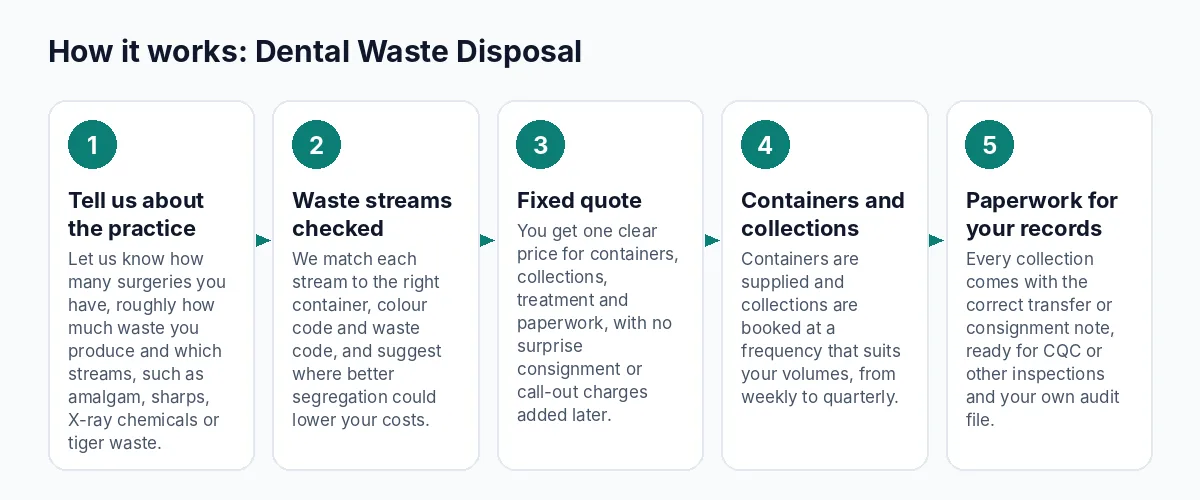
Many practices have moved to digital imaging, but those still using wet film produce two liquid hazardous wastes: fixer, which picks up silver from the film, and developer. Both must be stored in separate, sealed, labelled containers and collected by a hazardous waste carrier. Pouring them down the sink can breach the practice's trade effluent obligations and the Duty of Care. Fixer and developer must not be mixed, because combining them makes recovery harder and can cause reactions.
Intra-oral film packets also contain a thin lead foil behind the film. Lead foil should not go in clinical or general waste; it is collected separately for metal recycling. When a practice switches to digital, there is usually a final clear-out: part-used and unopened chemicals, unused film, the processor itself and any cleaning solutions. Handling all of this in one collection is usually the cheapest approach.
What is included
- Separate labelled containers for used fixer and used developer
- Collection by a registered hazardous waste carrier with a consignment note
- Silver recovery from used fixer where available
- Lead foil collection containers and recycling
- Collection of expired or unused chemicals and film
- Removal of old automatic or manual processors when switching to digital
- Advice on safe storage and spill containment for chemical containers
Who it is for
- Practices still using wet film for intra-oral or panoramic X-rays
- Practices switching to digital imaging and clearing out old chemicals
- Practices with old processors to remove during a refit
- Practices with stockpiled lead foils from film packets
- Practices unsure how long old chemical stock has been stored
How much does it cost?
As a guide, UK collection of X-ray fixer or developer usually costs £20 to £45 per container, lead foil recycling is often low cost, and a one-off clear-out with an old processor is usually priced as a single job. See our full cost guide.