Most of the soft waste a dental surgery produces is low risk. Gloves, masks, bibs, aprons and paper towels from routine treatment are normally offensive waste: unpleasant but not infectious, and suitable for yellow-and-black tiger bags. Infectious waste is waste with a known or suspected infection risk, or heavily contaminated with blood or body fluids, and goes in orange bags. Getting this split right matters because infectious waste costs more to treat, and over-classifying everything as infectious is one of the most common ways practices overpay.
HTM 07-01, the Department of Health guidance on healthcare waste, sets out the colour codes most contractors use in England, with equivalent guidance in Scotland, Wales and Northern Ireland. The practice, as producer, must classify its waste correctly, describe it accurately on the paperwork and store it securely. Bags should be tied, labelled with the practice details and kept in locked bins or a secure store away from patients and the public until collection.
What is included
- Orange bags and rigid bins for infectious waste
- Yellow-and-black tiger bags for offensive waste such as gloves, bibs and masks
- Lockable wheeled bins sized to your volumes for secure storage
- Bag tags or labels identifying your practice
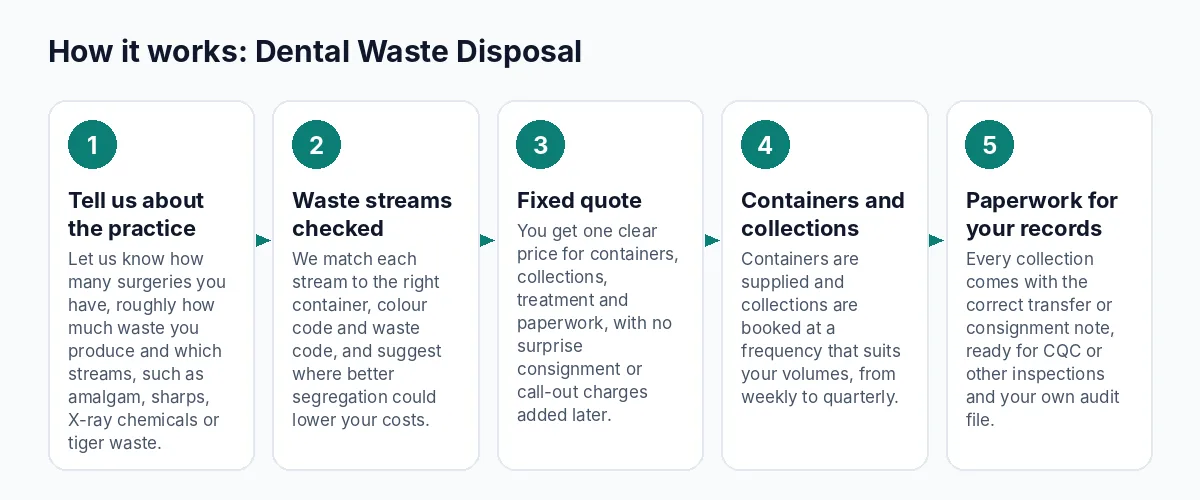
- Scheduled collections, typically weekly to monthly
- Waste transfer notes for offensive waste and consignment notes for infectious waste
- Segregation advice to reduce the amount of waste sent as infectious
Who it is for
- Every general dental practice producing gloves, bibs and masks
- Practices currently putting all soft waste in orange bags
- Implant and oral surgery clinics with more blood-contaminated waste
- Practices with limited storage that need secure, lockable bins
- New practices setting up waste segregation for the first time
How much does it cost?
As a guide, UK dental practices usually pay £5 to £25 per bag or bin for infectious and offensive waste, with tiger-bag offensive waste typically the cheaper stream. Moving low-risk items out of orange bags is often the biggest single saving. See our full cost guide.